YinkeValve · Engineered Flow Controlsale@yinkevalves.com
Home / Products / API 6D F51 Swing Check Valve Class 150
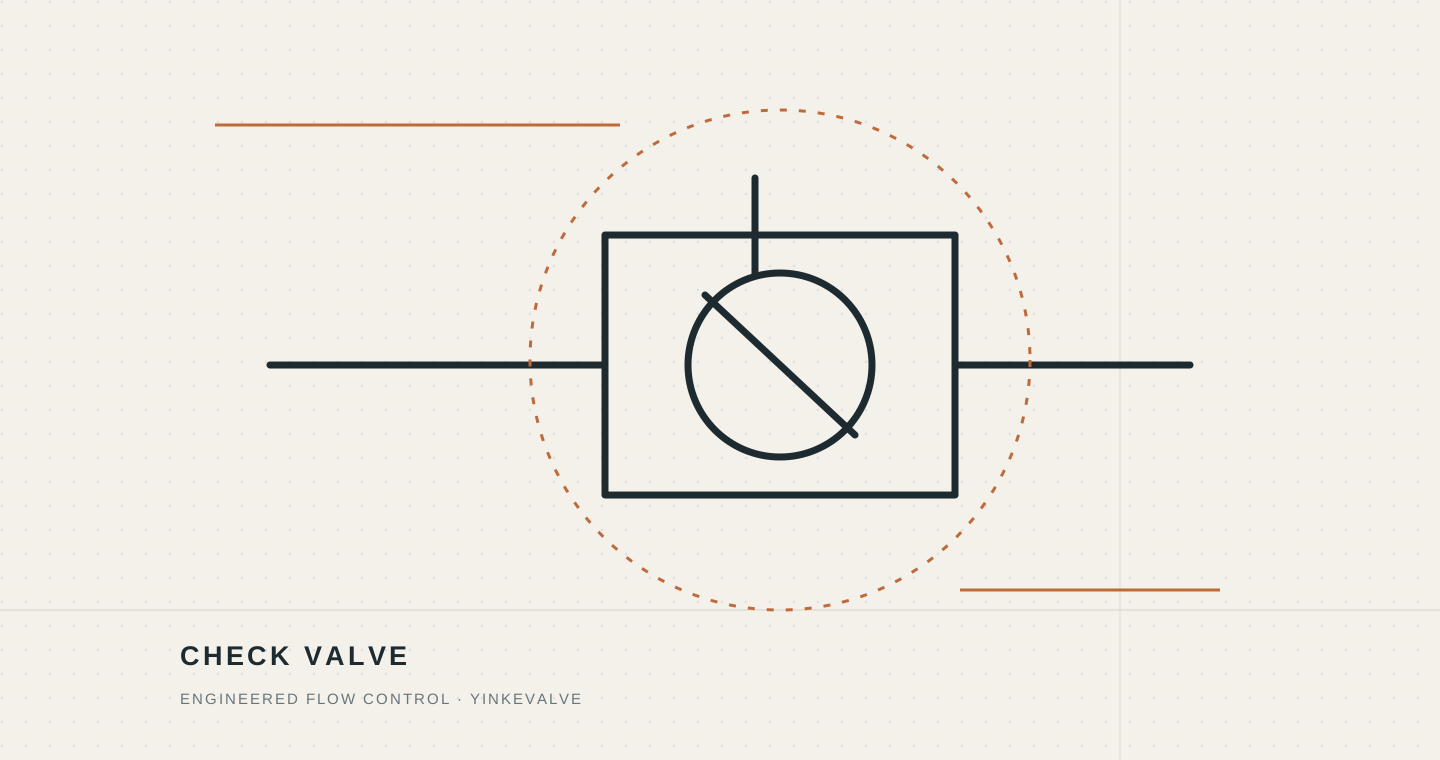
Check Valve

API 6D F51 Swing Check Valve Class 150

API 6D F51 Swing Check Valve Class 150 combines Swing Check Valve, F51, Class 150, Flanged / BW and Metal Seat in one defined purchasing configuration. Use it when those core parameters are already fixed by the valve list or piping specification.

API 6DDesign basis
Class 150Pressure class
F51Pressure-boundary material
Technical Configuration

API 6D F51 Swing Check Valve Class 150

DesignSwing Check Valve
StandardAPI 6D
Pressure ClassClass 150
Body MaterialF51
End ConnectionFlanged / BW
Seat / SealMetal Seat
Service / Application
OperationSelf-Acting
Buyer Decision Summary

Why This Exact Configuration Exists

The commercial scope for API 6D F51 Swing Check Valve Class 150 is controlled by the interaction of body construction, material, pressure class, piping interface, sealing and operation—not by the valve name alone.

Selection reason

Choose API 6D F51 Swing Check Valve Class 150 when the RFQ specifically calls for Swing Check Valve, F51, Class 150 and Flanged / BW. Swing-disc construction provides reverse-flow protection with closing response influenced by disc travel, hinge geometry and system velocity.

What changes technically

For API 6D F51 Swing Check Valve Class 150, the combined technical effect is duplex stainless-steel forging requiring controlled heat treatment and corrosion performance; lower-pressure industrial piping where material-specific pressure-temperature limits still govern; and the project can select flanged or butt-weld ends, so face-to-face, flange facing or weld-end preparation must match the piping class. Metal seating shifts the design toward hardfacing/coating, lapping, higher torque and wear control rather than polymer-seat compliance.

What to confirm before quote

Before pricing API 6D F51 Swing Check Valve Class 150, confirm nominal size and bore, design pressure/temperature, trim and stem/shaft material, the Metal Seat sealing requirement, Self-Acting operating basis, leakage/test acceptance and the final drawing/document package.

Compared with a nearby configuration

Compared with API 6D F51 Swing Check Valve Class 300, this configuration changes pressure class (Class 150 instead of Class 300). That difference is what a buyer should verify before treating the two pages as commercially interchangeable.

Design Basis

In API 6D F51 Swing Check Valve Class 150, the Swing Check Valve construction determines the closure support, body arrangement and maintenance approach. Confirm bore or flow path, body joint, stem/shaft retention, seat support, anti-blowout features where applicable and access requirements against the approved GA.

Pressure-Boundary Material

For API 6D F51 Swing Check Valve Class 150, the pressure boundary is F51. Duplex stainless-steel forging requiring controlled heat treatment and corrosion performance. Because this valve is Class 150 with Flanged / BW, verify the material condition, trim compatibility, bolting and any PMI/NDE or corrosion-control requirement as one package.

Pressure Class and Piping Interface

For API 6D F51 Swing Check Valve Class 150, the specified rating is Class 150 and the piping interface is Flanged / BW. Lower-pressure industrial piping where material-specific pressure-temperature limits still govern. The project can select flanged or butt-weld ends, so face-to-face, flange facing or weld-end preparation must match the piping class. Final dimensions and pressure-temperature suitability must therefore be checked against the selected material and design temperature, not inferred from class alone.

Seat and Seal Arrangement

For API 6D F51 Swing Check Valve Class 150, the listed sealing basis is Metal Seat. Metal seating shifts the design toward hardfacing/coating, lapping, higher torque and wear control rather than polymer-seat compliance. Confirm leakage acceptance, pressure/temperature limits and cycling together with the Class 150 loading and the selected Self-Acting operating method.

Operation and Actuation

For API 6D F51 Swing Check Valve Class 150, operation is Self-Acting. Self-acting operation depends on process differential pressure and closure dynamics rather than an external operator. The final operator or actuator basis should use the actual size, maximum differential pressure, Metal Seat friction/seating behavior and required operating or emergency time.

Service Conditions

No service qualifier is fixed by the product name, so API 6D F51 Swing Check Valve Class 150 should be released only after the actual fluid, temperature range, pressure cases, cycling and special service requirements are known.

Inspection and Testing

For API 6D F51 Swing Check Valve Class 150, tie MTC/heat traceability, dimensional inspection, PMI/NDE where specified, shell/seat testing, coating checks, witness points and final records to the approved API 6D datasheet and ITP.

Documents Before Release

The manufacturing release for API 6D F51 Swing Check Valve Class 150 should reference the approved GA, material/trim schedule, seat/seal definition, operator or actuator data, test scope and required final documentation.

Relevant Product Ranges

Ready to Review API 6D F51 Swing Check Valve Class 150?

Send the project specification for API 6D F51 Swing Check Valve Class 150; the quotation can then confirm size-dependent dimensions, trim, sealing, operation, inspection and final documents without changing the defined F51 / Class 150 basis.

Request Technical Quote