Design Basis
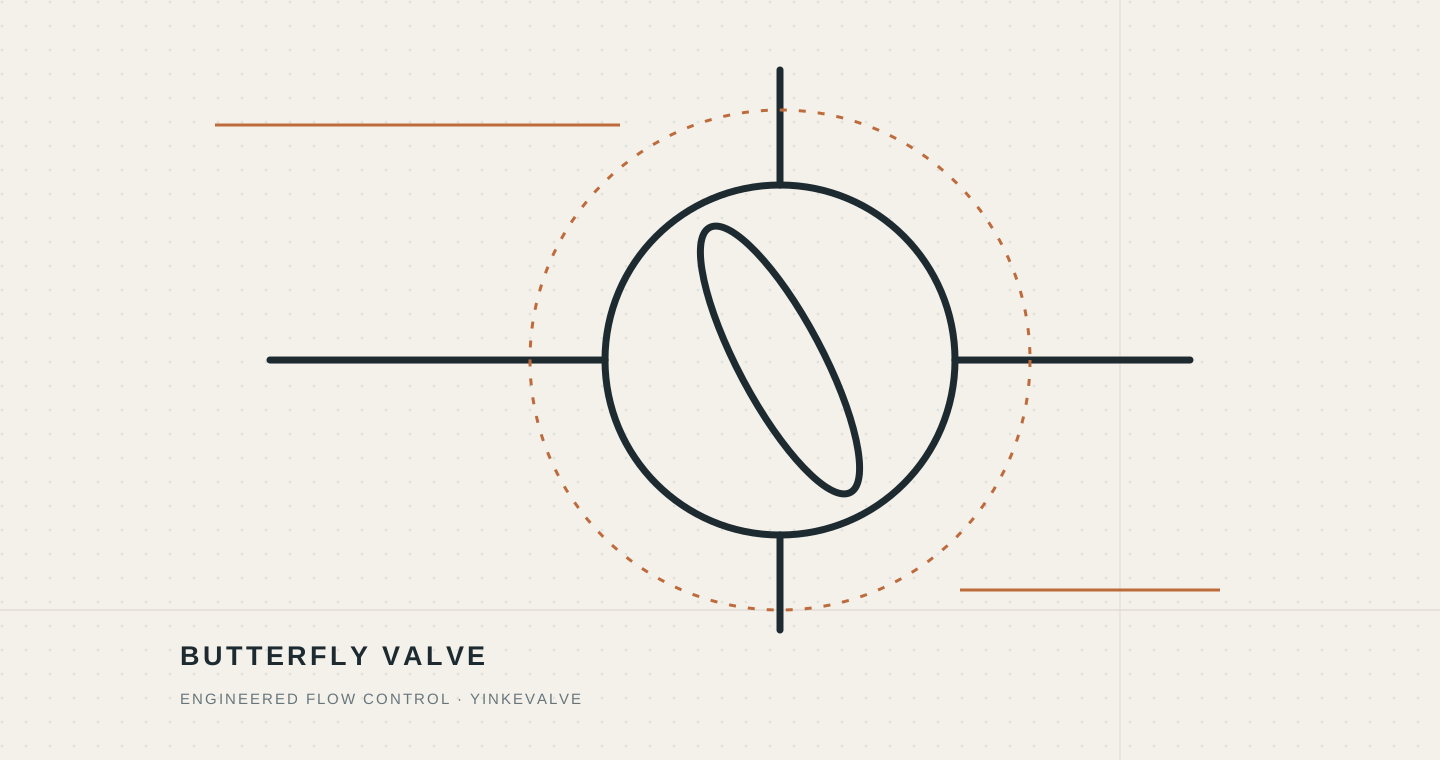
In WCB Resilient Seated Butterfly Valve Class 300, the Concentric Butterfly Valve construction determines the closure support, body arrangement and maintenance approach. Confirm bore or flow path, body joint, stem/shaft retention, seat support, anti-blowout features where applicable and access requirements against the approved GA.
Pressure-Boundary Material
For WCB Resilient Seated Butterfly Valve Class 300, the pressure boundary is WCB. Cast carbon steel for general hydrocarbon and process pressure boundaries. Because this valve is Class 300 with Wafer / Lug / Flanged, verify the material condition, trim compatibility, bolting and any PMI/NDE or corrosion-control requirement as one package.
Pressure Class and Piping Interface
For WCB Resilient Seated Butterfly Valve Class 300, the specified rating is Class 300 and the piping interface is Wafer / Lug / Flanged. Medium pressure service with heavier flanges, bolting and wall sections than class 150. Body style changes bolting, face-to-face, dead-end capability and installation envelope. Final dimensions and pressure-temperature suitability must therefore be checked against the selected material and design temperature, not inferred from class alone.
Seat and Seal Arrangement
For WCB Resilient Seated Butterfly Valve Class 300, the listed sealing basis is EPDM / NBR / PTFE. Ptfe-based seating provides low-friction soft sealing where pressure, temperature and chemistry remain within the selected polymer limits. Confirm leakage acceptance, pressure/temperature limits and cycling together with the Class 300 loading and the selected Lever / Gear / Actuator operating method.
Operation and Actuation
For WCB Resilient Seated Butterfly Valve Class 300, operation is Lever / Gear / Actuator. Gear or powered actuation should be selected from the valve torque curve, maximum differential pressure, operating frequency and required closing time. The final operator or actuator basis should use the actual size, maximum differential pressure, EPDM / NBR / PTFE friction/seating behavior and required operating or emergency time.
Service Conditions
No service qualifier is fixed by the product name, so WCB Resilient Seated Butterfly Valve Class 300 should be released only after the actual fluid, temperature range, pressure cases, cycling and special service requirements are known.
Inspection and Testing
For WCB Resilient Seated Butterfly Valve Class 300, tie MTC/heat traceability, dimensional inspection, PMI/NDE where specified, shell/seat testing, coating checks, witness points and final records to the approved API 609 / AWWA as applicable datasheet and ITP.
Documents Before Release
The manufacturing release for WCB Resilient Seated Butterfly Valve Class 300 should reference the approved GA, material/trim schedule, seat/seal definition, operator or actuator data, test scope and required final documentation.